GoPro Quik: Video Editor
- 4.5
- Rating
- 50.00M
- Installs
- Free
- Price

 Analysis by App-foxy
I have always liked the idea of an editor that turns a messy camera roll into something I would actually share. That is the space GoPro Quik: Video Editor occupies. It is a free video-editing app from GoPro in the Video Players & Editors category, aimed at people who want a finished-looking video without spending an evening learning a full desktop timeline. After using it, my impression is clear: it is at its best when speed, music, and automatic editing matter more than frame-by-frame control.
The app is available to Everyone, and its long presence on mobile is reflected in its release date of November 12, 2012. It has grown into a widely used tool, with a 4.5 average from around 1.1 million ratings and over 10 million installs. Those figures do not make it perfect, but they do explain why it remains an easy app to consider when someone asks me for a simple way to make better videos on a phone.
How GoPro Quik feels to use today
I’ll look at how GoPro Quik fits into a shared household routine: what makes it convenient for turning a group of clips into a video, and where a little coordination helps avoid confusion. I’ll also consider the practical boundaries around shared devices and age context, without assuming the app provides family-management tools.
You May Also Like

 Blood Strike: 2.5 Anniversary
Blood Strike’s Loadouts Turn Every Drop Into a Tactical Gamble
A close look at Blood Strike’s custom loadouts: how fast access to signature weapons reshapes its battle royale rhythm, rewards preparation, and narrows the gap between fights.

 Pandora - Music & Podcasts
Pandora’s Music Is Easy to Start, but Harder to Recover
Pandora’s strength is its low-effort path from a seed to a station. Its weak spot is how much confidence it asks you to place in connection, setup, and quiet recovery.

 8 Ball Pool
 Is Built on Rivalries, Rematches, and Routine
A close look at the rivalries, rematches, shared routines, and unanswered safety questions that turn a quick pool match into a persistent mobile community.

 Samsung Music
’s Quiet Strength Is Playing What You Already Own
Its reach comes less from spectacle than from dependable access to a personal library. That simplicity is both the app’s strongest retention engine and its ceiling.

 AccuWeather: Weather Radar
AccuWeather Review: A Quick, Clear Forecast for Everyday Decisions
For everyday plans, the best forecast is the one you can understand quickly. AccuWeather makes rain timing, radar, and local conditions easy to act on, with a few trade-offs.

 Hill Climb Racing
Why Hill Climb Racing Still Turns Crashes Into One More Run
A tiny car, a bumpy hill and one more upgrade: Hill Climb Racing keeps resurfacing because its simple chaos makes every near-miss feel personal.
More From Our News Desk



A quick route from clips to a shareable video
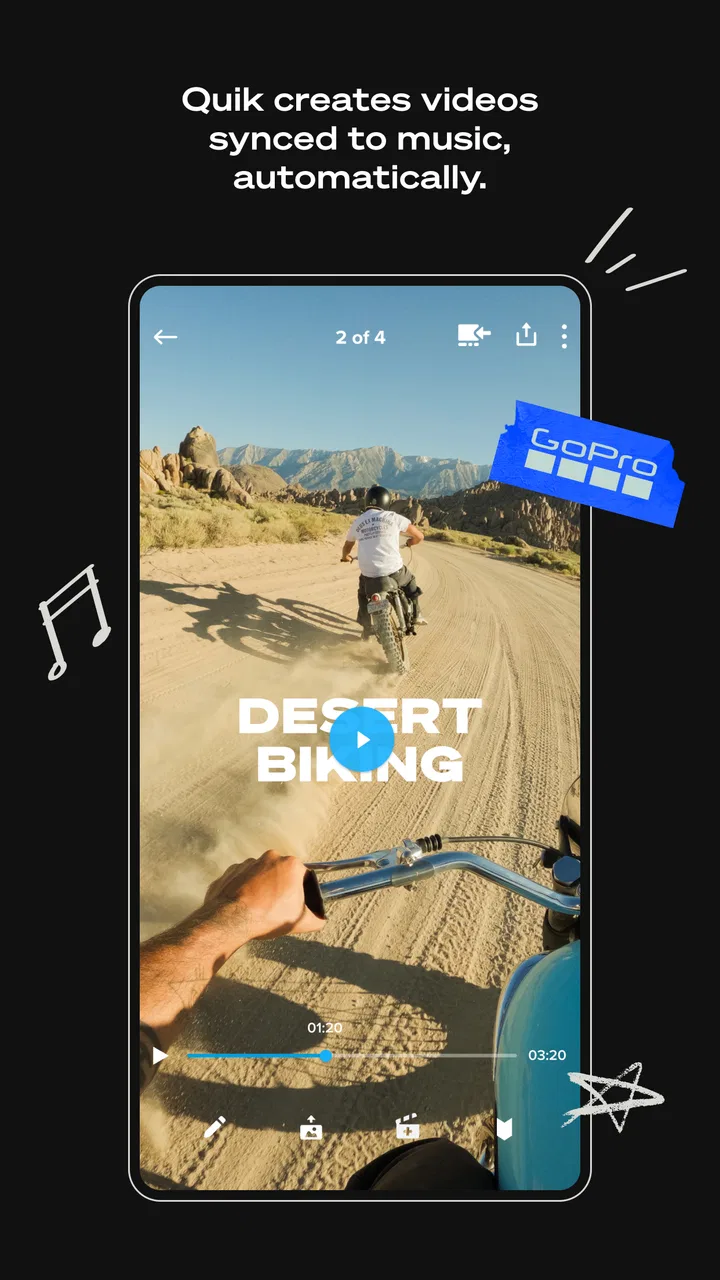
The first thing I noticed is that Quik is designed around selection rather than construction. Instead of beginning with an empty timeline and asking me to place every clip, it encourages me to choose photos and videos, pick a style or soundtrack, and let the app shape the result. That approach is especially useful after a day out, a family gathering, a short trip, or a sports session when I have plenty of material but very little patience.
The automatic video maker is the central attraction, but “automatic” does not mean completely hands-off. I still get better results when I remove weak clips before creating the edit. A shaky pocket recording, an accidental duplicate, or ten nearly identical photos can make any automated sequence feel careless. My practical advice is to make a small selection first, then allow Quik to do the arranging. The more focused the source material, the more intentional the finished video usually feels.
Music and filters give the result its personality quickly. A calm set of travel photos can become a relaxed montage, while action footage benefits from a faster rhythm. I found this more useful than applying random effects one by one, because the visual treatment and soundtrack are chosen as part of a single presentation. The trade-off is that the app’s creative direction can sometimes feel stronger than my own. If I want every cut to land exactly where I choose, I have to work around the automation rather than simply accepting its first suggestion.
Where the GoPro connection matters
Although I can see the appeal for ordinary phone footage, the app makes the most sense for people who use GoPro cameras. Action-camera clips often arrive in large batches, with moments separated by long stretches of road, water, sky, or preparation. Quik is useful in that situation because it helps me move from a collection of recordings to a compact highlight video without treating every file as a serious editing project.
That does not mean I need to be an extreme-sports user. A short bike ride, a beach afternoon, a child’s first attempt at something new, or a weekend walk can all produce the kind of material that benefits from automatic selection and music. Still, someone who never records video and only wants a basic photo slideshow may find the GoPro identity less relevant than a simpler gallery tool.
One workflow I recommend is to separate “keep forever” footage from “share now” footage. I use Quik for the second group: the clips that need a quick story, not a permanent master edit. This keeps the app’s convenience in the right role. I would not rely on an automatically assembled short video as the only backup of important memories, because an attractive montage is not a substitute for keeping the original files organized elsewhere.
Small decisions that improve automatic edits
A less obvious strength is how much the outcome improves when I treat the app like an editor’s assistant rather than an editor with perfect judgment. Before choosing a style, I look for a beginning, a middle, and an ending in my material. For example, I might start with arriving at a location, follow with the main activity, and finish with a wide view or a quiet closing moment. That simple structure gives the automatic sequence something coherent to work with.
I also avoid mixing unrelated events in one project. Combining a birthday, a commute, and a cooking clip may sound efficient, but the music and transitions then have no clear emotional direction. Quik can make a polished-looking result from mixed material, yet polish cannot solve a confusing subject. Keeping each project focused is one of the easiest ways to make its automation appear more thoughtful.
Another useful habit is to watch the entire preview with the sound on before exporting or sharing. A cut that looks fine in a silent thumbnail may feel awkward when the beat changes. I pay particular attention to the final few seconds, because automated videos sometimes feel as though they stop when the selected material runs out rather than ending with a deliberate closing image. Replacing the final clip with a calmer or wider shot often makes the whole piece feel finished.
Editing depth: simple, but not empty
Quik is not a professional nonlinear editor, and that is both its identity and its limitation. It gives me a fast path to trimming, rearranging, styling, and presenting short videos, but it does not invite the same detailed work as a traditional timeline editor. I would choose a more advanced alternative when I need careful audio mixing, layered titles, precise keyframes, complex masking, or a long project with many independent tracks.
For everyday social clips, that reduced complexity is a genuine advantage. I do not have to learn a large collection of panels before making something watchable. The interface keeps the important decisions close to the result: which media belongs in the story, what mood the music creates, and whether the visual style suits the subject. For a beginner, that can be more valuable than having dozens of controls that never get used.
The compromise becomes obvious when the automatic result is nearly right but not quite. I may want to hold one reaction shot longer, remove a transition, keep a particular section of a song, or place a title at a precise moment. Quik can be frustrating in those cases because the app’s streamlined workflow does not always expose the level of control I have in a dedicated editor. I see this as a design choice rather than a defect, but it still determines who should use it.
Music, filters, and the question of control
The music-led approach is one of the easiest ways to make ordinary footage feel more engaging. A soundtrack gives photos a sense of movement, and the visual filters can make clips from different phones or cameras look more consistent. I like this when I am preparing something for friends who care about the memory more than the technical details.
At the same time, music can overpower the subject. A gentle family moment may not suit an energetic edit, and a fast song can make a scenic sequence feel rushed. I always preview the video as a complete piece instead of judging the soundtrack from a short sample. If the music changes the mood in a way I did not intend, I would rather choose a simpler treatment than force the footage to match it.
The same caution applies to filters. A strong look can hide inconsistent lighting, but it can also make skin tones or natural scenery appear less believable. I prefer using the style as a starting point and then checking whether the people and places still look like themselves. The app makes experimentation easy, which is helpful, but quick experimentation can also encourage me to accept a dramatic effect simply because it is noticeable.
What the current business model means for users
The app itself is free, which makes it easy to try without committing money first. There are in-app purchases ranging from $1.99 to $99.99 per item, so I would pay attention to what is included in the particular workflow I want before assuming that every editing option is available at no cost. The free entry point is useful for testing the basic experience, while the purchase range suggests that some users may encounter optional paid features or plans as their needs grow.
My advice is not to subscribe or buy anything immediately. First, create a few different projects: one with photos, one with ordinary phone video, and one with action footage if you have it. Check whether the automatic style, music choices, and editing controls are enough for the way you actually work. If you only make occasional short montages, the free experience may be all you need. If you use the app regularly and value its broader workflow, then the paid options become a more personal cost-benefit decision rather than an assumption.
This is also where Quik differs from many basic gallery editors. It feels more like a dedicated storytelling tool than a button hidden inside a photo library. Compared with a full-featured mobile editor, it is faster to approach but less satisfying for meticulous work. Compared with a simple slideshow maker, it offers a more energetic, music-oriented result, especially when the source material comes from a GoPro camera.
How it performs in an ordinary day
Imagine returning from a day at a lake with a few short clips, several photos, and one longer recording of a jump into the water. I would first remove the duplicate shots and trim away the moments before and after the action. Then I would select the strongest material, choose a style that matches the bright outdoor setting, and watch the generated edit with the music enabled.
If the jump appears too early, the story may feel flat. I would move the arrival or preparation clips ahead of it, then finish with a wide view of the lake rather than another close-up. That small adjustment gives the app a clear arc while preserving its time-saving advantage. The result is not a documentary, but it is a pleasant short memory that I can show someone without explaining which parts are worth watching.
In a family setting, I would use a similar method but with more restraint. Faces and reactions matter more than flashy transitions, so I would reject styles that make the footage feel too aggressive. For a work-related clip, I would be more cautious still. Automatic music and filters may be fine for an informal behind-the-scenes post, but a product demonstration or instructional video usually needs precise timing, readable text, and controlled sound. That is a situation where another editor is the better choice.
Who should choose it, and who should skip it
I would recommend Quik to a phone user who wants a finished video quickly, a GoPro owner who needs help sorting action footage, or a beginner who finds conventional timelines intimidating. It is particularly appealing when the goal is a short, musical highlight rather than a carefully engineered production. The app also suits people who prefer making several small edits over spending a long session perfecting one complex project.
I would steer away from it if you need exact control over every cut, multiple audio layers, advanced color work, or a dependable long-form editing environment. It is also not the right choice for someone who dislikes automatic creative decisions. The app can help me reach a good result quickly, but it cannot always understand which moment has personal importance. A technically smooth clip is not necessarily the emotionally correct clip.
People who mainly edit still images may also find the video-first approach unnecessary. Likewise, if your phone has very limited free storage, working with several large video files can make the process less comfortable, even before creative decisions begin. I would prepare the media carefully and avoid importing everything from a long trip at once. A smaller batch is easier to review and gives the automatic editor a clearer brief.
What has changed over its long life
Because GoPro released the app in 2012, I view it as a product that has had time to move beyond the basic idea of stitching clips together. Its current identity combines automatic video creation, music, filters, and a workflow designed for quick sharing. That evolution matters to existing users: the app is no longer just a utility for camera owners who want to transfer footage, but a more complete place to shape short stories from mixed media.
I would still separate that established direction from expectations about future updates. A long-running app may continue to refine its editing experience, but I would not choose it based on features that might arrive later. The sensible decision is to judge the controls, styles, and workflow available when you install it, then treat future changes as a bonus rather than a promise.
For someone returning after a long break, the biggest adjustment is likely conceptual. The app is most valuable when I give it a curated set of media and let it handle much of the presentation. Users who remember older, more limited mobile editors may appreciate that shift. Users who expect a professional timeline may still feel that the simplified approach leaves important decisions out.
What I would watch before making it my main editor
My main question would be whether the app continues to balance automation with meaningful adjustment. Automatic editing saves time only when I can correct the few choices that matter most. I would watch how comfortably it handles mixed portrait and landscape footage, how easy it is to recover from an edit that feels wrong, and whether the music and visual styles remain useful across different kinds of personal content.
I would also pay attention to the relationship between the free experience and the in-app purchases. A free app is easy to recommend for testing, but regular users need to know whether the features they rely on remain practical without paying for extras. That is not a reason to dismiss Quik; it is simply part of deciding whether it fits an occasional or frequent editing habit.
Finally, I would keep an eye on how well it serves users who do not own a GoPro. The app has a clear connection to GoPro, yet its automatic editor can still appeal to people working with phone footage. If that broader usefulness remains strong, Quik has a reason to stay installed even for users who only occasionally record with an action camera.
My recommendation after using it
GoPro Quik: Video Editor is a focused solution rather than an all-purpose editing workstation. I like it because it removes the intimidating blank timeline and gives ordinary clips a clear visual and musical shape quickly. Its strongest results come from thoughtful media selection, not from blindly accepting the first automatic montage.
The limitations are equally clear. Detailed editors offer more control, and Quik can feel restrictive when I need precision rather than speed. The optional purchases also deserve a careful look before I build a long-term workflow around features I may not want to pay for. Still, the free starting point makes testing straightforward, and its Everyone age rating keeps the app approachable for a broad audience.
My final recommendation is simple: try it if you want short, polished highlights from a phone or GoPro camera and would rather make creative choices than technical ones. Skip it if your idea of editing involves layers, exact audio work, or complete timeline control. For the right user, the real strength of GoPro Quik is not that it replaces every editor; it is that it turns the first good version of a video into a practical result with very little friction.
FAQs for GoPro Quik: Video Editor
01What features does GoPro Quik offer for video editing?
GoPro Quik provides a variety of tools for video editing, including automatic video creation, a wide range of filters, customizable themes, and the ability to add music from its library. Users can also edit clips manually, adjust playback speed, and incorporate GPS data overlays. This makes it ideal for both beginners and advanced users looking to create professional-quality videos.
02Is GoPro Quik compatible with all devices and operating systems?
GoPro Quik is available for both Android and iOS devices. However, for optimal performance, it’s recommended to use a device with up-to-date software and sufficient processing power. Users should check the app's compatibility with specific devices on the Play Store or App Store to ensure full functionality and a smooth user experience.
03Does GoPro Quik require a GoPro camera to function?
No, GoPro Quik does not require a GoPro camera to function. While it is designed to complement GoPro products, users can import and edit footage from any device. This flexibility allows users who don’t own a GoPro camera to still benefit from the app’s powerful editing features for their videos.
04Are there any subscription fees or in-app purchases in GoPro Quik?
GoPro Quik offers a free version with basic features, but there is also a subscription service known as GoPro Quik Subscription. This subscription provides additional features such as unlimited cloud backup, premium themes, and music options. Users should consider their editing needs to decide if the subscription is worth the investment.
05How user-friendly is the GoPro Quik interface for beginners?
GoPro Quik is known for its intuitive interface, which is designed to be user-friendly for beginners. The app offers guided steps for creating videos, and its automatic editing feature simplifies the process. With drag-and-drop functionality and easy access to tools, even users with no prior editing experience can navigate and use the app efficiently.
Pros
- User-friendly interface for quick edits.
- Seamless integration with GoPro cameras.
- Variety of music tracks available.
- Automatic highlight reel creation.
- Cloud backup for media storage.
Cons
- Limited features in the free version.
- Occasional app crashes reported.
- Subscription required for full access.
- Video export can be slow at times.
- Editing options are somewhat basic.

GoPro Quik: Video Editor
Gallery